Water softeners for wells and confirmed hard water
Beaumont city water tests soft per City data. Softeners are most useful for private-well homes—or city homes where an in-home test shows elevated hardness. We start with testing, not assumptions.
If your main complaint is chloramine taste or odor on city water, look at whole-house filtration (catalytic carbon) and reverse osmosis for drinking—not a softener first.
Beaumont city water is typically soft
City purchasing specifications list hardness at ~25–35 mg/L (less than two grains per gallon)—in the USGS soft range. That figure is not in the Consumer Confidence Report; we cite it from City treatment-chemical bid data (DF0625-22) and explain it in our Beaumont TX water quality guide. Soft city water usually means less scale than hard-water markets—but your well or plumbing can still tell a different story.
Who softeners help most around Southeast Texas
- Private wells — hardness, iron, and sediment vary by well; test first. See well water treatment.
- Homes where a tap test shows elevated hardness — even on city supply.
- Scale on fixtures, soap that won’t lather, or dry skin after showers that line up with hardness results.
How softening helps
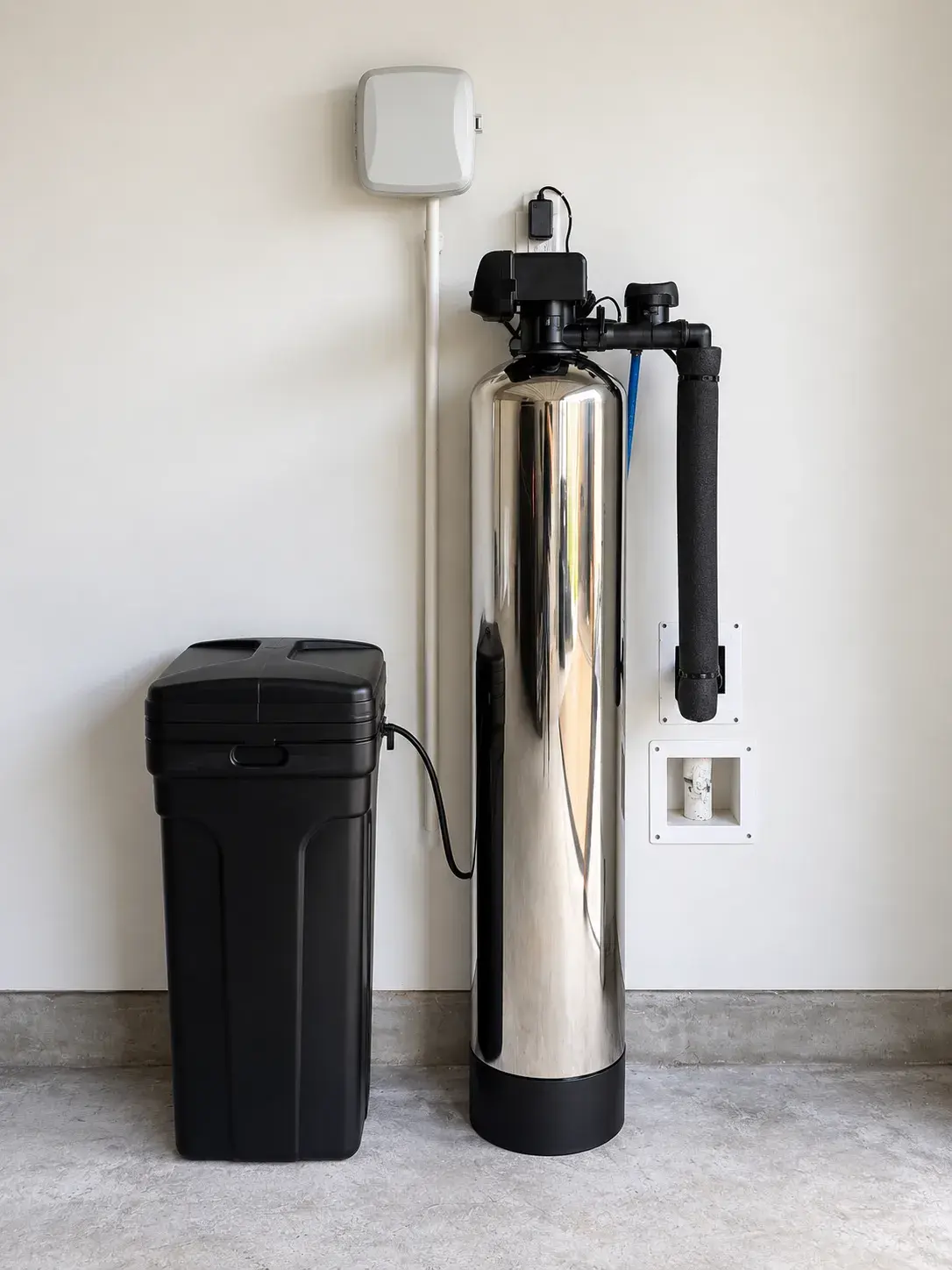
A whole-home water softener reduces hardness so water feels softer, leaves less scale on fixtures and appliances, and helps soap clean more effectively. We and our local installation partners size and install systems based on your test results and household use—not a one-size package.
How to tell if a softener fits
- Your test shows elevated hardness → softening is often the fit.
- Chloramine taste or smell dominates on city water → look at whole-house filtration instead (or both, if hardness is also high).
- You mainly want better drinking water → reverse osmosis may be the better first step.
Get a free water test so we recommend softening only when the data supports it.
Frequently asked questions
Is Beaumont city water hard?
Per City treatment-chemical specifications, Beaumont city water hardness is about 25–35 mg/L (< 2 gpg)—USGS soft. Hardness is not listed in the CCR. Softeners still make sense for many private wells or when your tap test shows elevated hardness.
How do I know if I need a softener?
Common signs include white crust on faucets, spotty glassware, soap that won’t lather, and dry skin after showers. Those clues suggest hardness, but only an in-home test confirms what’s in your water—especially important when city supply is generally soft.
Will a softener fix chloramine taste or smell?
Not by itself. Softeners target hardness minerals. Chloramine taste and odor usually need whole-house filtration (often catalytic carbon). Testing shows which path fits.
Does soft water feel slippery?
Many people notice soap rinses differently and skin feels less tight. That “slick” feel is normal with softened water and usually fades as you adjust.
What about salt and maintenance?
Most residential softeners use salt (or a potassium alternative) and need periodic refills. We and our local installation partners explain upkeep clearly before you decide.
Curious if your water is hard?
Soften only when hardness shows up—test first for city or well water. We and our local installation partners walk through the results and only recommend treatment if it makes sense for your home.